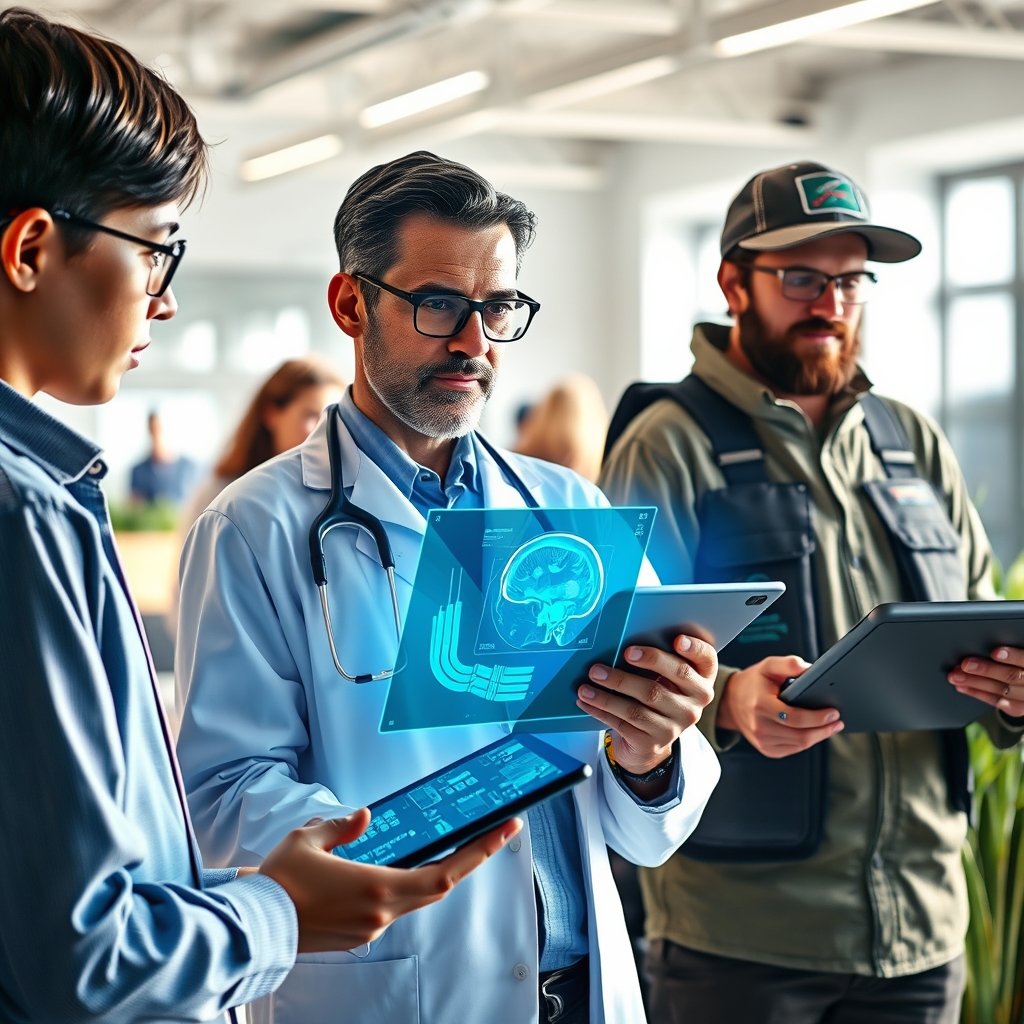
Imagine having a super-fast digital assistant that never gets tired. This assistant can look at millions of pieces of information in a second. It can find complex patterns and solve problems much faster than any human can alone. These helpers are special computer programs. They are often called intelligent systems or smart software.
These advanced programs are designed to learn. They observe data, identify connections, and then use that knowledge to make decisions or predictions. They are changing almost every part of our lives, from how we shop to how doctors treat sickness.
It is important to understand that these systems do not think or feel like people do. They are tools. Very advanced tools, but still tools. They operate based on mathematical rules and the vast amounts of data they are given.
How Smart Programs Learn and Grow
The biggest difference between a regular computer program and a smart program is the ability to learn from experience. Think about teaching a child to recognize a cat. You show them many pictures of cats: big ones, small ones, black ones, and white ones. The child slowly figures out the common features that define a cat.
Intelligent systems learn in a similar way, but on a massive scale. This process is often called machine learning.
The Role of Training Data
For a smart program to work, it needs huge amounts of training data. If you want a program to identify cancer in X-rays, you must first feed it thousands of X-rays that are already labeled by human doctors as either having cancer or not having cancer.
The program studies these examples. It looks for tiny details and patterns that repeat in the positive examples. It builds a mathematical model based on these patterns.
Once the training is complete, the program can look at a brand-new X-ray it has never seen before. It compares the new image to the patterns it learned and makes a prediction about whether cancer is present.
Recognizing Patterns
Pattern recognition is the core skill of these digital helpers. They are excellent at spotting things that might be too subtle or too numerous for a person to notice.
For example, in the stock market, a smart system can analyze trading data from the last twenty years across ten thousand different companies simultaneously. It looks for complex relationships between prices, news events, and trade volumes that signal future changes.
Because they work so quickly, these advanced algorithms can handle complexity that would overwhelm traditional computing methods.
Smart Tools in Your Everyday Life
You interact with intelligent systems constantly, often without knowing it. They make our daily activities easier, faster, and more personalized.
Improving Online Search
When you type a question into a search engine, a smart program instantly decides which of the billions of available web pages are the most relevant and useful to you. It considers factors like the quality of the website, how recent the information is, and what other users found helpful.
If you misspell a word, the system often corrects it automatically. It understands the intent of your question, not just the exact words.
Recommendation Systems
Have you ever noticed that when you finish watching a movie online, the service immediately suggests three other movies you might like? This is the work of a smart recommendation system.
These systems analyze your viewing history, the genres you prefer, and even what people similar to you have watched. They use this data to predict what will keep you engaged next.
The same systems are used by online stores to suggest products you might want to buy. They make shopping feel more tailored to your interests.
Digital Assistants and Voice Commands
Many people now use voice commands to control their phones or speakers. When you speak, the device must first understand the sounds, convert them into words, and then figure out the meaning of the request.
This understanding is powered by sophisticated programs that process human language. They learn different accents, speech patterns, and vocabulary over time, making them better listeners.
Intelligent Systems in Major Industries
The real power of these systems is seen when they tackle big, complicated challenges in essential fields like medicine, transportation, and agriculture.
Revolutionizing Healthcare
In hospitals, smart programs are becoming invaluable partners to doctors. They help analyze medical images, such as MRI scans or CT scans, much faster than human eyes can.
These programs can spot tiny abnormalities that might signal the beginning of a disease, allowing doctors to catch problems earlier when they are easier to treat.
Another important use is in drug discovery. Researchers use powerful computing systems to simulate how thousands of different chemical compounds will interact with the human body. This dramatically speeds up the process of finding new medicines.
Smarter Farming
Farmers use intelligent systems to grow food more efficiently and sustainably. This is often called precision agriculture.
Sensors in the field collect data on soil moisture, temperature, and nutrient levels. Smart programs analyze this data and tell the farmer exactly where water or fertilizer is needed, down to the square foot.
This prevents waste, saves resources, and increases the amount of food produced from the land. They can even identify individual weeds from crop plants using images taken by drones.
Improving Safety and Manufacturing
In large factories, intelligent systems monitor assembly lines. Cameras connected to these programs inspect every single product as it moves down the line.
If a product has a tiny defect, the system spots it instantly, far faster and more consistently than a human inspector could over an eight-hour shift. This ensures that only high-quality items reach the customers.
In robotics, advanced algorithms allow machines to perform complex tasks, like welding or painting, with incredible precision. They learn to adapt to slight variations in materials or positioning.
Tools for Education and Creativity
Intelligent digital helpers are also changing how we learn and how we create art and stories.
Personalized Learning Experiences
In schools, smart software can adapt teaching materials to fit each student’s specific needs. If a student is struggling with a certain math concept, the program provides extra practice problems focused exactly on that weak area.
If another student masters the concept quickly, the program offers advanced challenges. This personalized approach helps every student learn at their own pace.
These systems can grade essays and quizzes instantly, giving teachers more time to spend helping students one-on-one rather than grading papers.
Assisting Creative Work
Creative professionals use these advanced programs to speed up their work. Graphic designers use smart tools that can automatically remove backgrounds from photos or suggest color palettes that work well together.
Musicians use programs that can help them compose by suggesting harmonies or generating drum beats based on a simple melody. The human is still the artist, but the computerized helper provides powerful assistance.
Even for writing, smart software can check grammar and suggest better ways to phrase sentences, making communication clearer and more professional.
Keeping Smart Systems Reliable and Fair
As these programs become more powerful, it is crucial that we ensure they are used responsibly. The quality of the output depends entirely on the quality of the input data.
If the data used to train the system contains errors or reflects unfair biases from the past, the resulting smart program will likely repeat those mistakes or biases. For example, if a program is trained mostly on pictures of only one group of people, it might struggle to recognize others accurately.
Scientists and engineers spend huge amounts of time testing these systems to check for unfairness or errors. They must constantly monitor the outputs to make sure the decisions being made are fair and accurate for everyone.
Transparency is also key. When a smart system makes an important decision, such as approving a loan or flagging a medical risk, the people affected need to understand how that decision was reached. It should not feel like a mysterious black box.
The future of these intelligent systems is not about replacing human effort. It is about enhancing it. By handling repetitive tasks and finding complex patterns in massive datasets, these digital assistants free up human time and energy. This allows people to focus on the things that require unique human skills, like compassion, creativity, critical thinking, and making ethical judgments about the information the smart tools provide. As these programs continue to evolve, understanding how they work and how to guide them will be an essential skill for everyone, ensuring that these powerful tools serve humanity effectively and responsibly across all industries and aspects of life.